For many youth aging out of the foster care system, adulthood begins abruptly and without a safety net. Rent, groceries, transportation, and other everyday expenses quickly become significant barriers. At Jackson County CASA (Court Appointed Special Advocates), a United Way Impact 100 partner, staff and volunteers work to bridge these gaps by offering guidance, resources, and consistency to youth, ages 14 to 26, as they navigate this transition. While youth age out of the foster care system at 21, Jackson County CASA continues to support them until age 26.
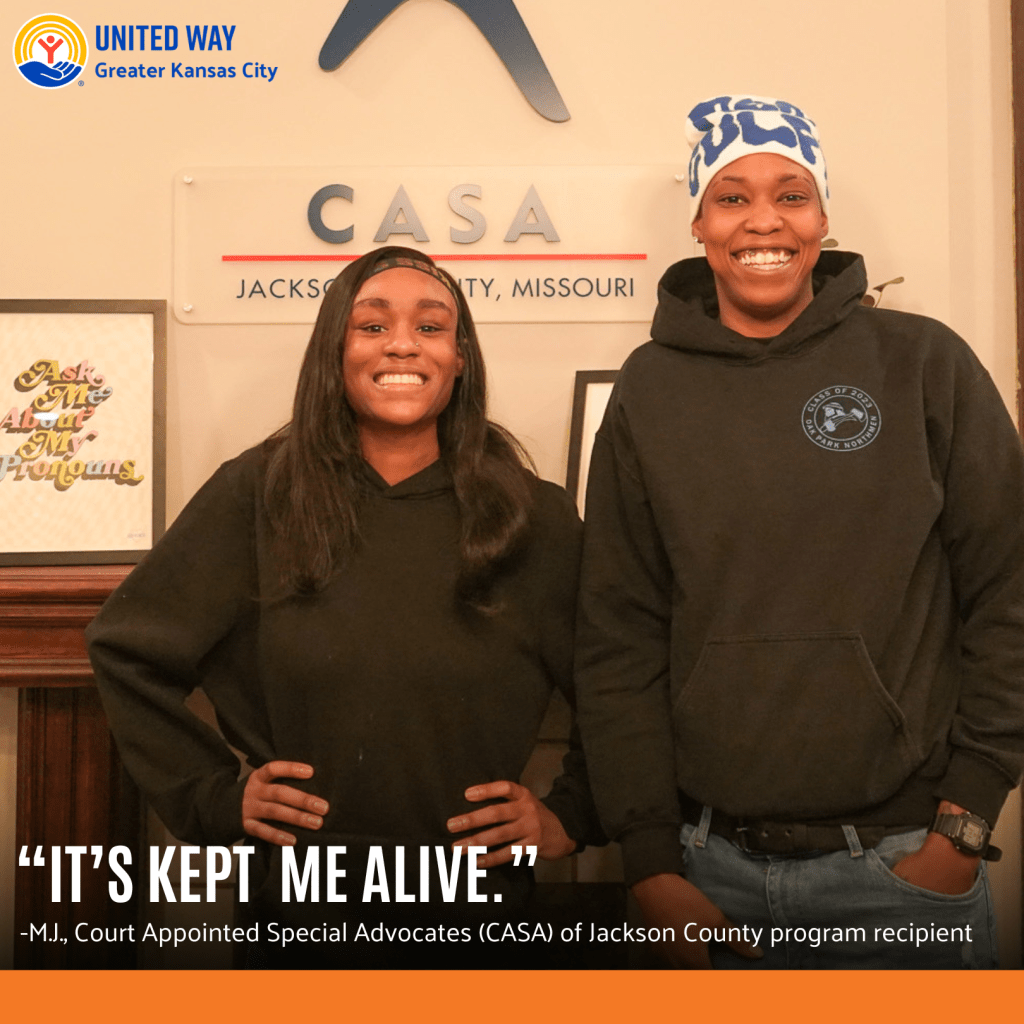
For M.J. and Rochelle, turning 18 was a cliff edge.
M.J., now 21, works at Amazon loading packages and serves as board president of the Jackson County CASA House Committee, where she welcomes newer youth and helps share ideas for improving the foster care system.
“How has CASA’s support affected me? It’s kept me alive,” she said. “Life hits you all at once. To have a support system, it takes a weight off your shoulders.”
Having adults available to reach out to like Kandi Bond, Jackson County CASA’s Older Youth Program Manager, along with other staff, has made a life-changing difference for M.J., noting that mental health is a major challenge for youth in foster care.
“All of my youth feel guilty about reaching out. There’s a lot of shame attached to needing help, and I try to explain to them that most youth their age still need help,” Bond said.
Both young adults described how growing up without stable role models makes adulthood harder to navigate, explaining that many youths compare themselves to those who hurt them and may even try to rationalize what happened.
“You start making excuses for the things that happened to you when you were just a child,” M.J. said, “You look at the path that you’re going down, you see yourself failing, you don’t really love yourself how you used to and you kind of just don’t like life. And you’re like, ‘I wonder if this is how that person who used to abuse me feels.’”
Rochelle recently began working as a pharmacy technician at University Health. She entered foster care at age six, was adopted at 17, and reentered the system at her current age of 20. She noted how experiences as youth in foster care stick with them, like frequent moves, instability, and the pressure to become independent early. As young adults, that transitions into managing current responsibilities while also working through past experiences and learning new skills on their own.
With Jackson County CASA’s support, Rochelle was able to regain stability and continue progress toward her goals.
“Just having people there to push me and to call and check on me is nice because it does get lonely. I feel like it keeps a lot of people alive, because mental health is a big thing,” she shared.
For both Rochelle and M.J., Jackson County CASA’s help with basic needs, such as providing hygiene products, laundry supplies, clothing, work attire, and other essentials, has allowed them to stretch tight budgets and focus on saving for long-term needs. Youth can visit freely and choose what they need without having to ask permission, which provides both relief and a sense of autonomy. In addition, Jackson County CASA prioritizes providing high-quality items and products that donors would choose for themselves.
“It makes us feel like humans,” shared M.J.
“It makes an impact on them that they’re not just seen as foster or ‘throwaway’ youth, that people really care about them. They’re smart, they have dreams, and truly are some of the humblest teenagers you will ever meet. The things that I think most of us take for granted, they don’t,” Bond said.
The transition out of foster care continues to present young adults with a range of challenges, including tight finances, transportation difficulties, limited access to food, and navigating an independent life. Community support plays an essential role in filling these gaps. Rideshare cards, bus passes, and grocery gift cards make immediate, practical differences while hygiene products, culturally specific items, and work clothes are also extremely helpful.
In 2025, United Way supported more than 17,500 children and families in foster care, along with child abuse prevention and intervention services. To learn more about Jackson County CASA and how you can support young adults experiencing or transitioning out of foster care, visit here.