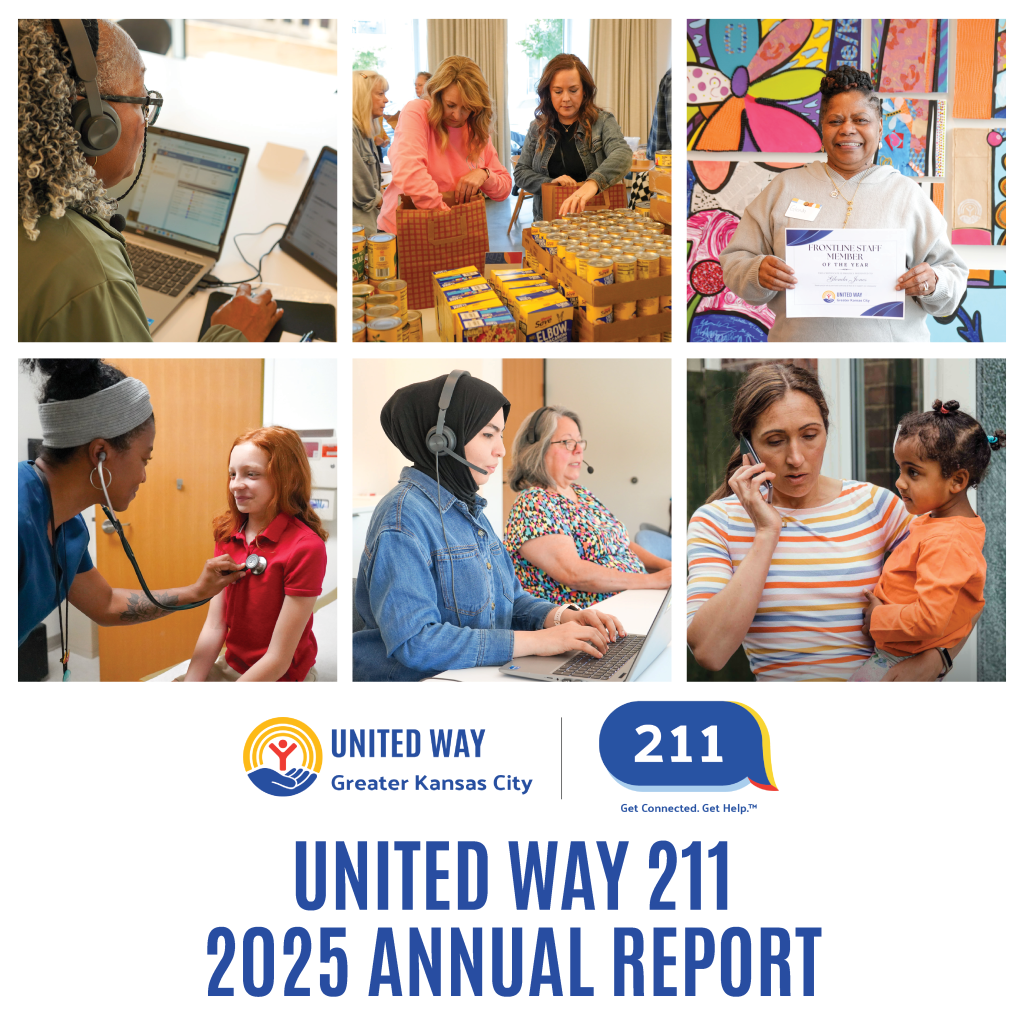
United Way of Greater Kansas City is proud to operate 211, our region’s 24/7 resource and referral line. Today, we’re releasing our 211 Snapshot: 2025, detailing the community’s needs and how 211 is helping neighbors connect with needed support.
In 2025, our 211 Community Resource Specialists (CRSs) continued to see a high volume of need with 347,839 contacts (combination of phone calls and unique visits to 211KC.org) and 90% of needs were met with an appropriate resource referral.
Calls to 211 and online inquiries via 211KC.org are free and confidential. Specialists listen closely to uncover needs and identify help, utilizing a database of more than 7,000 community resources. Service is available in 150 languages.
The top five needs identified by callers and online inquiries in 2025 were:
- Housing & Shelter
- Utility Assistance
- Tax Preparation
- Transportation
- Legal Services
Nationally, 211 was designated as a three-digit number for health and human services in 2000. Locally, this is the 20th anniversary of 211 services operated by United Way in Kansas City in our 23-county region. In that time, 211 has responded to a total of more than 2.2 million calls from our community.
“You call 911 when you’re facing a life or death emergency, 988 for mental health crises and 211 is there for the everyday life crises you might face and simply don’t know where to turn,” said Todd Jordan, Ph.D., United Way Vice President of Community Impact and 211 Executive Director. “No matter the circumstance, 211 is here for our community.”
More than half of all those reaching out to 211 for assistance are employed full-time, part-time or are retired. Even so, many callers were looking to prevent housing loss, maintain utilities and secure legal or tax-related services. Unmet needs cluster around housing access, legal and tax support, as well as short-term shelter options, highlighting some of the structural gaps. Twenty-percent of individuals within this group were at immediate risk of losing housing or actively unhoused, demonstrating how thin the margin is for stability within working households. The largest share of callers are from Jackson County, Mo. (69%) and the highest share by age are those 18-39 years old (39.6%).