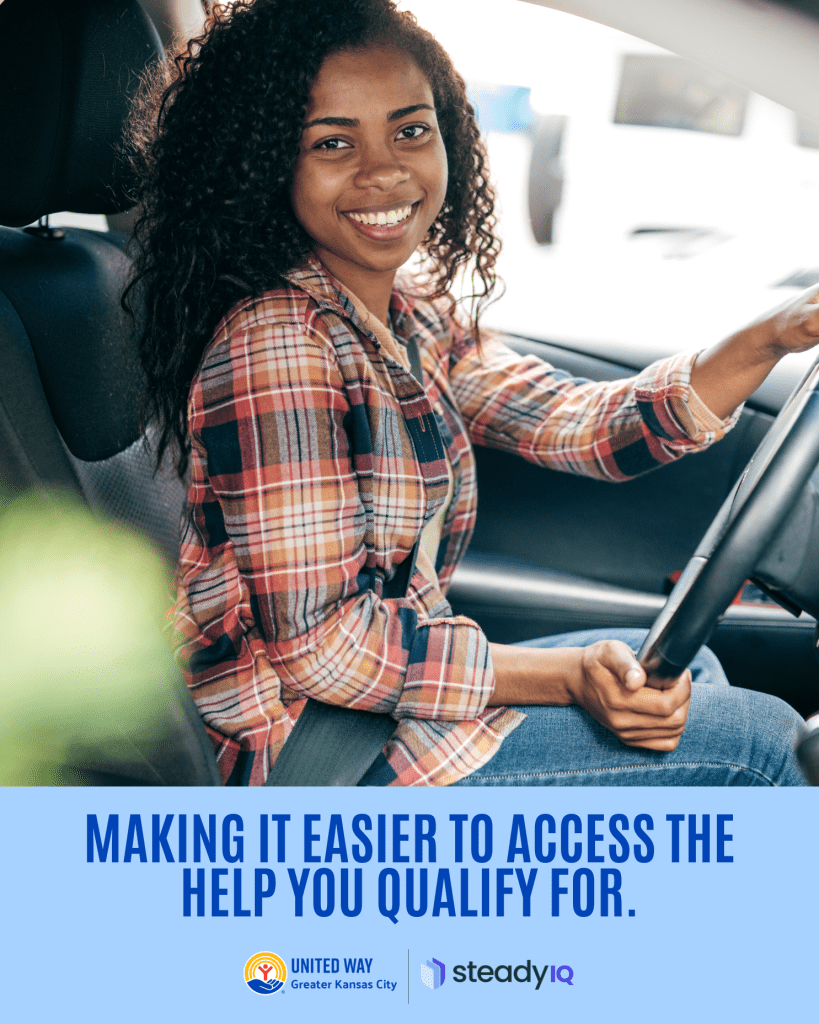
United Way of Greater Kansas City (UWGKC) has entered into a partnership with SteadyIQ to strengthen how income is verified across its financial assistance programs, improving access to critical safety net services for families and individuals facing financial hardship.
UWGKC operates several community-based programs that help Missourians and Kansans experiencing financial hardship access services and assistance that keep them stable in their homes. These programs serve households with low or moderate income, where accurate and timely income verification is a foundational requirement.
Through this partnership, UWGKC will utilize SteadyIQ’s Income Passport as its primary income verification solution across its portfolio of financial assistance programs.
“Verifying income is often one of the biggest barriers our clients face when applying for benefits,” said Todd Jordan, Vice President of Community Impact with UWGKC. “SteadyIQ allows us to simplify that process—especially for households with nontraditional income—so families can move forward with confidence and dignity.”
UWGKC was particularly drawn to SteadyIQ’s ability to handle hard-to-verify and nontraditional income, including self-employment, freelance, and 1099 earnings. These income types represent a growing share of the households UWGKC serves and are frequentlyunderserved by traditional verification methods.
SteadyIQ’s Income Passport will enable UWGKC Case Navigators—trusted guides for clients—to send income verification requests as part of their existing workflows. Clients can complete verifications securely and directly on their phone, tablet, or computer, reducing friction while maintaining program integrity.
“We are proud to partner with United Way of Greater Kansas City,” said James Haberlen, Chief Commercial Officer at SteadyIQ. “Their work sits at the intersection of trust, access, and impact. Together, we are making it easier for families to verify income and access the benefits they are eligible for—without unnecessary delays or administrative burden.”
The partnership reflects a shared commitment to reducing complexity, improving equity, and ensuring that community-based organizations have modern tools to support the people they serve.