In the wake of the ongoing federal government shutdown, United Way 211 has become a critical lifeline for those feeling its effects most directly. As the shutdown has lingered with no resolution in sight, dozens of callers, many of them federal employees or family members—are reaching out after losing income due to furloughs, missed paychecks, or being required to work without pay.
According to research conducted by Bank of America last year, about a quarter of all households are considered to be living paycheck-to-paycheck, an increase from five pre-pandemic numbers. Naturally, lower-income households are more likely to face financial struggles. But even some higher income households appear to be spending nearly all they earn.
For many, the shutdown has created a perfect storm of financial instability. Callers are facing urgent challenges like utility disconnection, unpaid rent, and empty pantries. Without access to unemployment benefits or emergency relief, some families aren’t sure how they’ll be able to cover even their most basic needs.
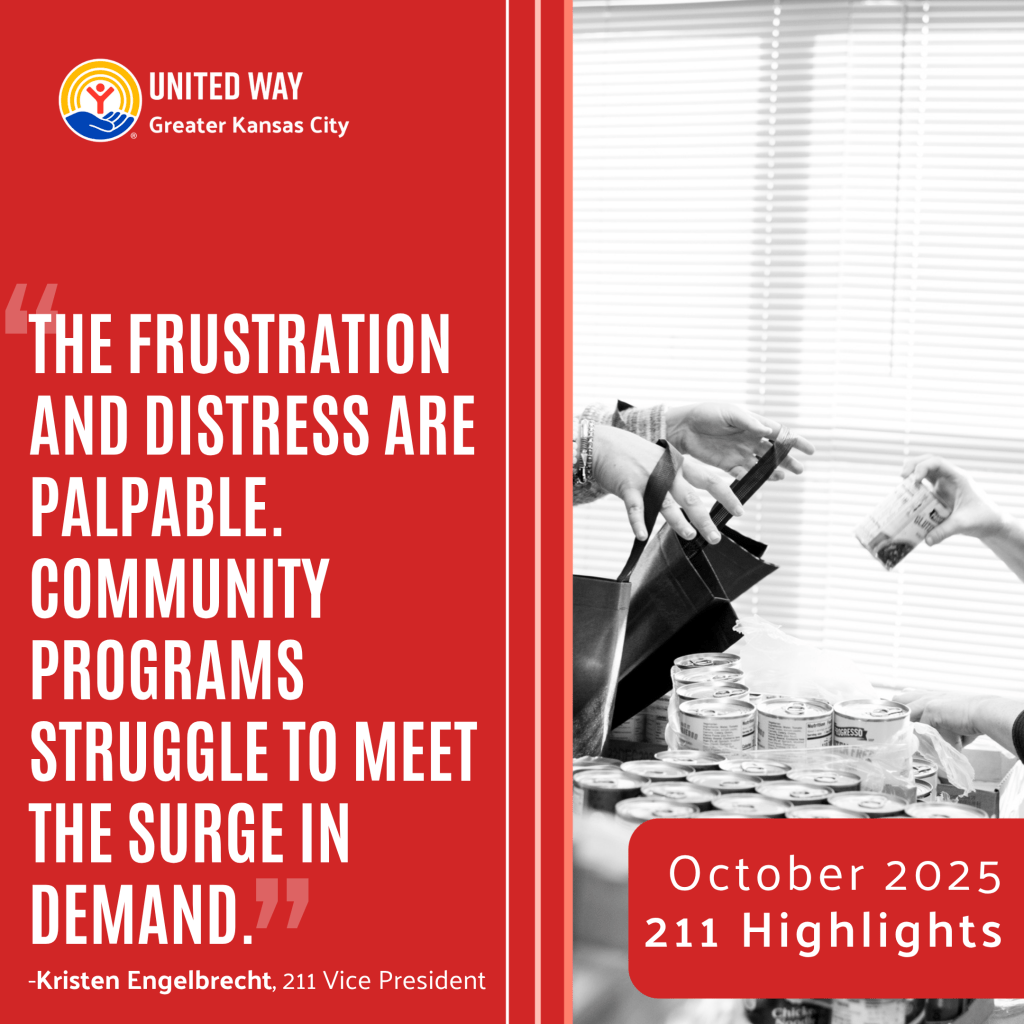
“The frustration and distress are palpable,” said Kristen Engelbrecht, United Way of Greater Kansas City 211 Vice President, “Many callers share they feel forgotten and they’re unsure where to turn for help as existing community programs struggle to meet the surge in demand.”
In rural communities, the situation can be even more dire. Shutdown-related funding interruptions have left some local agencies temporarily closed or unable to offer support at all.
Through it all, 211 specialists continue to listen, guide, and connect callers with every available resource. Whether it’s a referral for food assistance, rental help, or emotional support, each call is a reminder of how important it is to have a trusted, compassionate voice on the other end of the line when times are uncertain.
One federal worker furloughed by the government called 211 this month seeking rent assistance. Though she wasn’t yet at risk for eviction, the loss of income made her future uncertain. The 211 community resource specialist listened carefully and connected her with the Salvation Army and other local programs. While some agencies require an eviction notice as part of intake eligibility, the specialist’s empathy and follow-through gave her reassurance she wasn’t alone in planning ahead.
Another caller, another government employee and parent in Kansas City, Mo. reached out for help with rent, utilities and transportation. The specialist provided multiple referrals, explaining that while there was no dedicated program for federal workers at the time of the call, options were still available to bridge the gap. When transportation became a barrier, the specialist even helped find a ride service to ensure she could continue getting to work.
Food insecurity is also a growing concern for many families impacted by the shutdown. One caller expressed worry about the potential delay in SNAP benefits. The specialist quickly connected her to nearby food pantries, Bishop Sullivan Center, and community food distributions through United Way Impact 100 partner Harvesters—The Community Food Network, helping ensure no family had to go hungry while awaiting program payments to resume.
A single mom from Lee’s Summit, Mo. was facing utility disconnection and food insecurity, due to impacts surrounding the government shutdown which has impacted her ability to work and make ends meet. She called to inquire about referrals to help with groceries and covering utility bills. The specialist was able to provide the caller with resources to several food pantries in her area as well as providing referrals for utility payment assistance. The caller was thankful and mentioned she was able to get a pledge of $200 from Lee’s Summit Social Service Department. The specialist provided her with additional information about LIHEAP, which the caller was very excited about because she’d heard they were going to be accepting applications November 1st. The caller expressed her gratitude for the specialist’s thoroughness, all the resources she was provided and detailed information shared saying, “Thank you so much. I appreciate all the resources. This is so helpful.”
Support from 211 is available 24 hours a day, seven days a week. It’s always free and confidential, with service available in 150 languages. A government shutdown-specific resource is now included in our database related to the Federal Employee Education and Assistance Fund. There are five main services they’re providing including micro-grants and low-interest loans for affected federal employees.